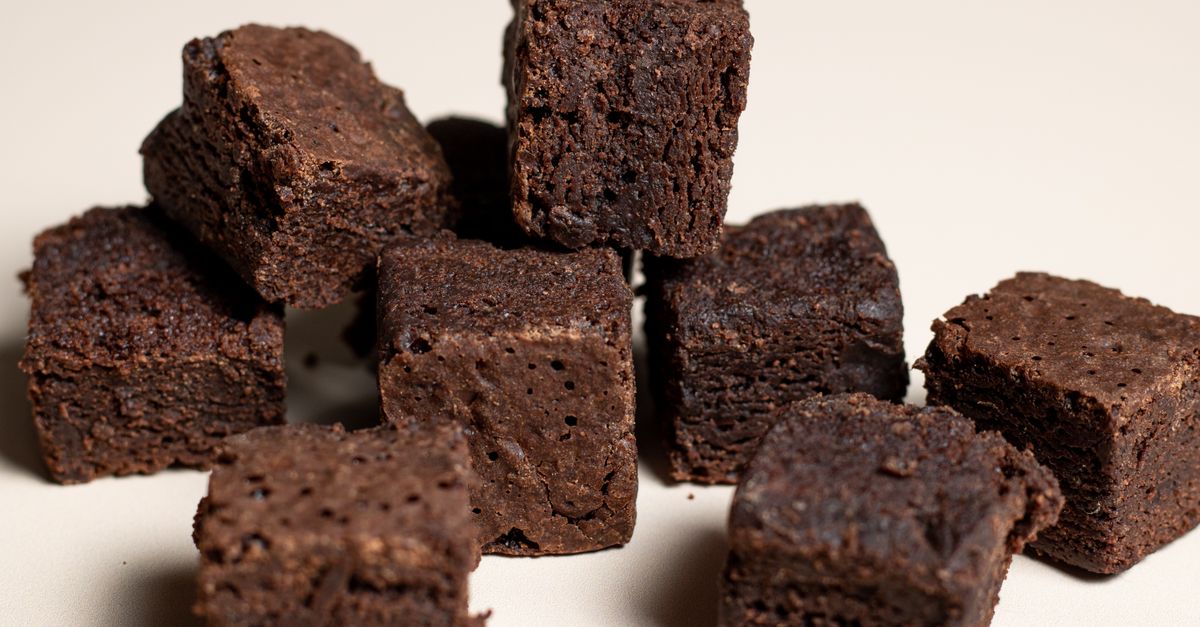
Why Your Homemade Brownies Are Cakey (And The Simple Shifts That Guarantee Fudgy Perfection Every Time)
Are you constantly chasing that elusive, dense, fudgy brownie, only to pull a crumbly, cake-like square from the oven? I know the frustration. For years, my brownies were a source of disappointment. They’d puff up beautifully, smell incredible, but ultimately betray me with a light, airy texture that was more akin to chocolate cake than the rich, molten core I craved. It felt like a culinary conspiracy, especially when recipe after recipe promised “fudgy perfection.” What was I missing?
It turns longer than I thought. My journey from cakey catastrophes to consistently fudgy triumphs wasn’t about finding a magic ingredient or a secret technique. It was about understanding the fundamental differences in how ingredients behave and how subtle shifts in technique could dramatically alter the final texture. I’ve learned that the path to fudgy brownies is less about following a recipe blindly and more about understanding the science behind the bake. And the truth is, most home bakers—myself included for a long time—make the same few, seemingly minor, mistakes that collectively push their brownies into cake territory.
Key Takeaways
- Prioritize fat over leavening agents by adjusting sugar and egg ratios for a denser crumb.
- Use melted butter and chocolate strategically to control gluten development and moisture.
- Avoid overmixing the batter, which incorporates too much air and encourages a cakey texture.
- Undercook your brownies slightly and chill them to achieve the ultimate fudgy consistency.
The Overlooked Villain: Too Much Leavening (or the Wrong Kind)
The biggest culprit behind cakey brownies, in my experience, isn’t usually a single ingredient but rather the ratio of leavening agents to fat and moisture. Most recipes that yield cakey brownies inadvertently include too much baking powder, baking soda, or simply rely on too many eggs, especially whole eggs.
Think about it: what makes a cake light and fluffy? Leavening agents that create gas bubbles, expanding during baking to create an open, airy crumb. While a little lift is good, too much in a brownie recipe actively works against fudginess. Many brownie recipes are essentially a modified cake batter, carrying over the same assumptions about structure and rise. This is the fundamental flaw.
What changed everything for me was recognizing that a brownie’s rise should primarily come from the expansion of steam and a minimal amount of leavening, not vigorous aeration. When a recipe calls for a tablespoon of baking powder, I immediately get suspicious. For truly fudgy results, you want barely a whisper of leavening, or often, none at all.
I’ve found that the ideal fudgy brownie often relies on just 1/4 to 1/2 teaspoon of baking powder for an entire 8x8 or 9x13 pan. Some of my most consistently fudgy recipes use absolutely no chemical leavening whatsoever. Instead, they rely on the natural aeration from whisking eggs with sugar (but not too much, as we’ll discuss) and the steam created by a high-moisture batter. If your go-to recipe has more than 1/2 teaspoon of leavening, try reducing it by half next time. You’ll be amazed at the difference in density.
The Sugar and Egg Trap: Creating Structure Where You Want Goo
Another common mistake that leads to cakey brownies lies in the sugar and egg ratios, and how they’re incorporated. Many recipes instruct you to cream butter and sugar together until light and fluffy, or to whisk eggs and sugar until pale and thick. While this is fantastic for cakes and cookies where you want a delicate structure, it’s detrimental to fudgy brownies.
When you cream butter and sugar, you’re incorporating air, which, again, creates lift and a cakey texture. Similarly, vigorously whisking eggs and sugar creates a stable foam that also contributes to aeration and structure. For fudgy brownies, you want to minimize this air incorporation as much as possible.
My breakthrough came when I started using melted butter and only gently whisking the wet ingredients. Instead of creaming, I melt butter with chocolate (or just butter if using cocoa powder) and then stir in the sugar until just combined. The sugar doesn’t get a chance to create air pockets. Then, I add eggs one at a time, incorporating them just until the yolk is broken and the mixture is cohesive, but no more.
Furthermore, consider the type of eggs. Recipes that call for a high number of whole eggs often lean cakey. Egg whites are primarily protein, which provides structure when cooked. For maximum fudginess, a higher ratio of egg yolks to whites can be beneficial. Many professional bakeries use a combination of whole eggs and extra egg yolks to achieve that signature dense, rich texture. If your recipe calls for three or more whole eggs, try replacing one whole egg with two egg yolks. This small adjustment significantly boosts richness and moisture, while reducing the structural protein that makes brownies cakey.
Overmixing Your Way to Dryness: The Gluten Development Problem
This is a fundamental baking rule, but it bears repeating for brownies: overmixing after adding flour is a surefire way to activate too much gluten, leading to a tough, dry, and ultimately cakey brownie. Gluten, once developed, creates an elastic network that traps air and gives baked goods their chew and structure. For bread, this is ideal. For fudgy brownies, it’s the enemy of tenderness.
I used to be so concerned about making sure all the flour was perfectly incorporated, I’d keep stirring and stirring, convinced I was being thorough. What I was actually doing was building a sturdy gluten framework that prevented the brownie from collapsing into its desired fudgy state.
What truly changed my brownie game was adopting a ‘barely-mix’ philosophy for the dry ingredients. Once the flour, cocoa powder, salt, and any minimal leavening are added to the wet mixture, I mix just until no streaks of dry flour remain. This often means literally 10-15 gentle folds with a spatula. It might look a little shaggy, but resist the urge to keep going. A few tiny pockets of unincorporated flour are far preferable to an overmixed, tough brownie.
This principle applies even before the flour: ensure your melted butter and chocolate are fully combined with the sugar before you add any dry ingredients. Any additional mixing once the flour hits the liquid will develop gluten, so make those early steps count to minimize the final mixing time.
The Silent Saboteur: Baking to the Wrong Doneness
Many home bakers treat brownies like cakes, baking them until a toothpick comes out completely clean. This is perhaps the most common and devastating mistake for fudgy brownie texture. A clean toothpick signals an overbaked, dry, and inevitably cakey brownie.
My personal journey to perfect fudginess was fraught with this exact error. I’d carefully follow every step, only to pull out what felt like a solid brick. It took me a long time to accept that what felt “underdone” in the oven was actually the key to gooey perfection once cooled.
For truly fudgy brownies, you want to pull them from the oven when a toothpick inserted into the center still has moist crumbs clinging to it. The edges should be set, but the center should still look slightly underbaked, perhaps even a little wobbly. Carry-over cooking, also known as residual heat, will continue to cook the brownies as they cool, setting the center to a perfectly moist, fudgy consistency.
Another pro tip I learned is to chill your brownies after baking. While they might be tempting straight out of the oven, allowing them to cool completely at room temperature (or even in the fridge for an hour or two) dramatically improves their texture. Chilling not only helps them set cleanly for slicing but also concentrates the fudginess, giving you that dense, satisfying bite. I will often bake a batch in the evening and let them chill in the refrigerator overnight before cutting, and the results are consistently superior.
The Moisture Balancing Act: Fat vs. Liquid
Finally, let’s talk about the role of fat and liquid. Cakey brownies often lack sufficient fat or have too much water-based liquid. Fat, particularly butter, contributes significantly to richness, moisture, and a tender crumb. Water, while essential, can lead to a chewier, more cake-like texture if not balanced.
Consider your fat source. Using oil exclusively can lead to a brownie that is moist but might lack the depth of flavor and the specific type of fudginess that butter provides. Butter, with its milk solids, caramelizes and contributes to a more complex flavor profile and a melt-in-your-mouth texture.
My game-changer here was understanding that a high fat-to-flour ratio is crucial for fudginess. Many fudgy brownie recipes have almost equal amounts of butter/fat and flour by weight, sometimes even more fat. This contrasts sharply with many cake recipes, which have a higher flour ratio. When evaluating a recipe, look for generous amounts of butter and chocolate (which also contains cocoa butter, a fat).
Also, be mindful of any extra liquid beyond what eggs and melted butter provide. Some recipes add milk or water, which can dilute the richness and promote a cakey texture. If your recipe includes extra liquid, consider reducing it slightly or swapping it for a richer alternative like a touch of cream or even a little extra melted butter (if the overall fat content allows).
By focusing on these five key areas – minimizing leavening, controlling sugar and egg aeration, gentle mixing, careful doneness, and a high fat-to-flour ratio – you can transform your brownie baking from cakey frustration to fudgy triumph. It’s all about understanding what each ingredient and technique contributes to the final texture and making intentional choices to achieve your desired outcome. Happy baking!
Frequently Asked Questions
Q1: Can I make fudgy brownies with cocoa powder instead of melted chocolate?
Yes, absolutely! Many excellent fudgy brownie recipes use cocoa powder. The key is to ensure you’re still incorporating enough fat, usually by increasing the amount of butter or oil, to compensate for the fat present in baking chocolate. Dutch-processed cocoa powder often yields a darker, richer color and less acidic flavor, contributing to a more profound chocolate experience.
Q2: Why are my brownies dry even if they’re not cakey?
If your brownies are dense but dry, it’s likely a sign of overbaking, even if you pulled them out when they looked slightly underdone. Every oven runs differently, so cooking times are always a guideline. Try reducing the baking time by 3-5 minutes and testing the center with a toothpick for moist crumbs. Also, ensure your recipe has enough fat (butter or oil) and moisture (eggs).
Q3: How do I know when my brownies are perfectly fudgy in the center without being raw?
When a toothpick or skewer inserted into the center comes out with moist, fudgy crumbs clinging to it, but no wet batter, your brownies are usually perfectly done for a fudgy texture. The edges should be set, but the center might still look slightly soft or even wobble a little when gently shaken. Remember, carry-over cooking will continue to set them as they cool.
Q4: Can I use oil instead of butter for fudgy brownies?
While you can use oil, butter typically produces a richer flavor and a more desirable fudgy texture due to its milk solids and unique fat composition. Oil (like vegetable or canola) will yield a moist brownie, but it may lack the depth of flavor that butter provides. Some recipes effectively use a combination of both for different textural benefits.
Q5: What’s the ideal pan size for fudgy brownies?
For a typical fudgy brownie recipe, an 8x8-inch or 9x9-inch metal pan is often ideal. These sizes ensure a good thickness, which is crucial for achieving a moist, fudgy center while allowing the edges to set. A larger 9x13-inch pan might result in thinner brownies that bake faster and are more prone to drying out if not monitored carefully.
Written by Clara Thorne
Home & Hearth, Personal Organization
A former university archivist with a passion for unearthing forgotten practices and making them accessible.
You Might Also Like

Why Your Homemade Yogurt Lacks That Tangy Kick (And The Simple Shifts That Guarantee Complex Flavor)
Discover why your homemade yogurt falls flat on flavor and learn the simple, expert-backed techniques to achieve truly tangy, delicious results.
Why Your Homemade Sauces Are Breaking (And The Pro Secrets for Silky Smooth Perfection Every Time)
Ever wonder why your homemade sauces split or curdle? Learn the pro secrets to achieve silky smooth, stable sauces every time. Stop breaking your emulsions!
Why Your Homemade Pizza Crust Is Soggy (And What Actually Works for Pizzeria-Quality Crisp)
Tired of soggy homemade pizza? Discover the non-obvious mistakes sabotaging your crust and the pro tips for pizzeria-level crispness.